Managing heavy-duty equipment involves decisions between the OEM parts and their aftermarket replacements, which aren’t simply technical. It will most certainly affect performance, cost, downtime, reliability, and ultimately your bottom line. This is especially so in the heavy equipment world, where stakes are high and machines are more often than not in remote or intensive-use locations.
Understanding the Terms
- OEM parts are made by either the original manufacturer of the equipment or one of its specified suppliers to meet that manufacturer’s specifications. They are built to the design, materials, tolerances, and often brand‑approved finishes of the original.
- Aftermarket parts are those produced by independent manufacturers, and they serve to fit and function like the original part, but often with different materials, tolerances, and processes; in some cases, they come at a significantly lower cost.
Why the Choice Matters for Heavy Equipment
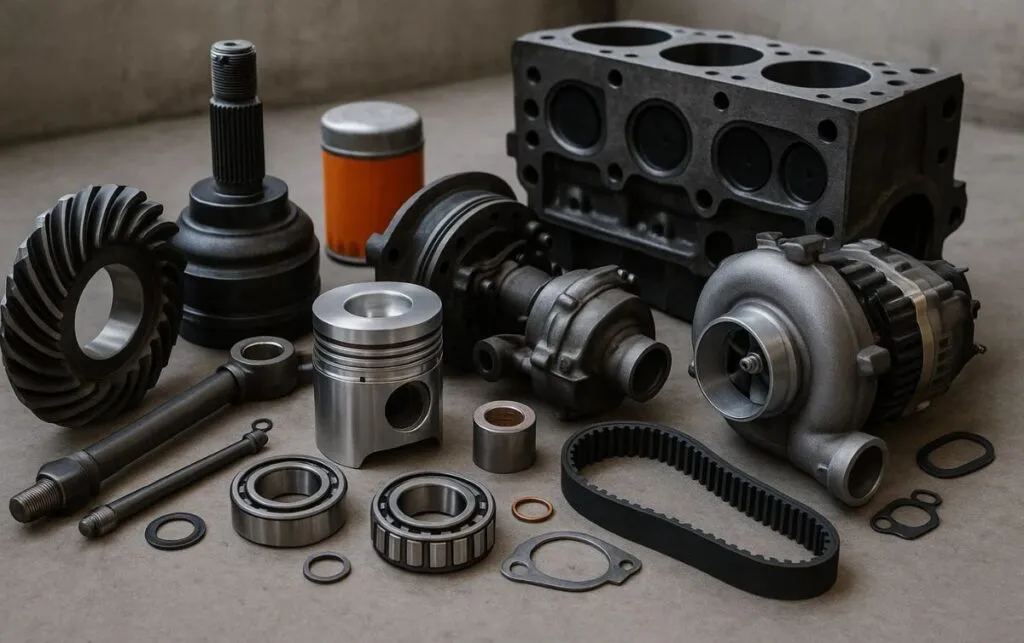
In construction, mining, agriculture, and heavy industry generally, the cost of failure is high: unplanned downtime, the loss of productivity, safety risks, and higher maintenance costs. A sub‑par part may work for a while, but when load, vibration, temperature, or contaminants push the limits, weak links can break. Therefore, choosing the right type of replacement part is not just about price; it’s about lifecycle, return on investment, and the management of risk.
The case for OEM parts
1. Guaranteed fit and function:
Since OEM parts are manufactured to the exact specifications of the original, you avoid issues like improper fit, premature wear, or failure due to tolerances.
2. Reliability and consistency:
OEM parts usually undergo strict testing and quality control to conform to the standards set by the equipment manufacturer.
3. Warranty adherence:
By using OEM parts, one would retain warranties in place where applicable and be covered with compatible replacements.
4. Preserving resale value:
Equipment maintained using OEM parts can retain a higher resale value, since buyers typically prefer machines with documented, brand-approved maintenance.
5. Optimized lifecycle:
This is because OEM parts can often deliver longer service life, in many cases, because they meet the same durability parameters as the original.
The Case for Aftermarket Parts
1. Lower cost:
Aftermarket parts are often cheaper, so they can be attractive to cost-conscious operations or when non‑critical components are being replaced.
2. Greater availability/faster delivery:
Some aftermarket suppliers offer parts faster or with less wait time than the OEM channels, which helps reduce downtime.
3. Broader choice and innovation:
Some aftermarket manufacturers invest in improved materials or design tweaks, offering performance or value advantages.
4. Flexibility:
For older machines, discontinued OEM parts, or non‑critical systems, the only practical option may be to look at aftermarket options.
Related read:-What Are the Key Benefits of Using OEM Parts for Heavy Equipment?
How to Choose What’s Best for Your Situation
Here’s a strategic way to decide between OEM and aftermarket, tailored for heavy equipment operations.
1. Assess the criticality of the part
- For systems tied to safety, machine integrity, significant cost of failure-e.g., drive trains, hydraulics, engine components-favor OEM
- For non-critical subsystems, for example, cosmetic covers, non-load-bearing parts, you could consider aftermarket.
2. Evaluate risk vs. cost
- Estimate cost of failure: What is the downtime cost if that part fails prematurely?
- Compare that to the savings from choosing an aftermarket part. If the risk of failure and associated cost is high, OEM may provide better value.
3. Check the supplier’s reputation
- Whether OEM or Aftermarket, the supplier quality matters: select on the basis of strong traceability, good materials, positive performance history, and backup support.
4. Consider the lifecycle and service interval
- How many years is this machine expected to run before replacement? For long‑term assets, investing in OEM might pay off across the lifecycle.
- If the machine is leased or has a shorter expected life, the lower-cost aftermarket part may be more appropriate.
5. Factor in warranty and service policy
- Does using aftermarket parts compromise the warranty or service agreements that exist with the original equipment manufacturer?
- Sometimes OEM parts may have guaranteed performance or support that cannot be matched by aftermarket parts.
6. Check compatibility and documentation.
- Ensure that aftermarket parts exactly match specifications in dimensions, material grade, finish, and performance.
- Look for certification, test data, or an endorsement. Compatibility is guaranteed with OEM parts.
Real‑World Example: A Balanced Strategy
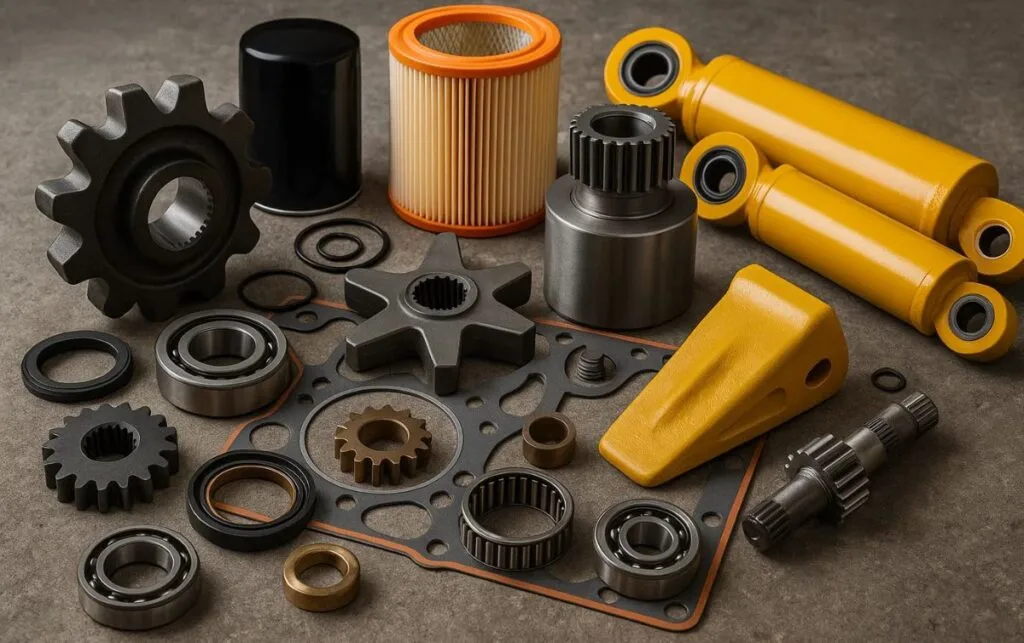
Imagine operating a fleet of excavators, and hydraulic cylinders need to be replaced. These are highly critical, meaning if one fails, you’re facing significant downtime. In this case:
- The wise move may be to go with OEM cylinders to minimize risk.
- For lesser components-say hoses, belts, air filters-you could well choose quality aftermarket parts, balancing cost and acceptable risk.
Final Thoughts
However, choosing between OEM and aftermarket parts isn’t a one‑size‑fits‑all decision. Instead, it’s much about aligning the choice with:
- The criticality of the component
- cost and impact of failure
- Your maintenance strategy and machine lifecycle
- Supplier reliability and support
- Budget constraints and tolerance for operational risk
By building a parts strategy that uses OEM where it counts, and reputable aftermarket where it makes sense, you can optimize both cost and performance.